<?xml version="1.0" encoding="utf-8"?><feed xmlns="http://www.w3.org/2005/Atom" ><generator uri="https://jekyllrb.com/" version="4.4.1">Jekyll</generator><link href="https://samuelklutse.com/feed.xml" rel="self" type="application/atom+xml" /><link href="https://samuelklutse.com/" rel="alternate" type="text/html" /><updated>2026-04-08T15:10:37+00:00</updated><id>https://samuelklutse.com/feed.xml</id><title type="html">Sparksam’s Blog</title><subtitle>Personal blog about tech, projects, and thoughts.</subtitle><author><name>Samuel Klutse</name><email>klutse.samuel@gmail.com</email></author><entry><title type="html">What Is Truth and What Defines the Truth?</title><link href="https://samuelklutse.com/thoughts/what-is-truth/" rel="alternate" type="text/html" title="What Is Truth and What Defines the Truth?" /><published>2026-03-20T00:00:00+00:00</published><updated>2026-04-03T00:00:00+00:00</updated><id>https://samuelklutse.com/thoughts/what-is-truth</id><content type="html" xml:base="https://samuelklutse.com/thoughts/what-is-truth/"><![CDATA[<h2 id="the-ground-beneath-my-feet">The Ground Beneath My Feet</h2>

<p><img src="/assets/images/posts/what-is-truth/newspapers.jpg" alt="A pile of newspapers stacked on top of each other" />
<em>Photo by <a href="https://unsplash.com/@utsavsrestha">Utsav Srestha</a> on <a href="https://unsplash.com/photos/HeNrEdA4Zp4">Unsplash</a></em></p>

<p>We are in March 2026, and the world, as some people, if not most of the world, would describe it, is on fire. There is mayhem in so many places than one cannot keep track of. Ukraine-Russia is in the 4th year, the Middle East is locked in cycles of violence. Across Africa, we have Sudan, the Eastern Congo, and the Sahel, which conflicts rage but have far less international attention that I think they deserve, but I digress.</p>

<p>Left and Right, we are hit with headlines that flatly contrast with each other on the same events, and sometimes the bias is clearly visible and sometimes is more subtle.</p>

<p>At some point, I had to ask myself a few questions:</p>

<ul>
  <li>What <em>is</em> the truth?</li>
  <li>What makes me <em>think</em> something is true?</li>
  <li>How <em>can</em> I ascertain that something is true?</li>
</ul>

<p>As the old saying goes, <em>the more you look, the less you see</em>”. These questions made me realize that the implications of truth reach into everything. Let’s think about it for a second.</p>

<ul>
  <li>In <strong>Religion</strong>, we have billions of people that belong to faiths that claim the hold of absolute truth, yet the claims contradict one another. They cannot all be right. Right?</li>
  <li>Talking about <strong>Science</strong>, very educated people <em>knew</em> the Earth was <a href="https://en.wikipedia.org/wiki/Center_of_the_universe">the center of the universe</a> until Copernicus, Galileo, and Kepler proved it was not. This proves that even scientific “truth” is provisional; the best answer we have until a better one arrives.</li>
  <li><strong>Politics</strong>, I hate talking about this one. Thankfully we can all agree that the same facts can be waved around to serve different agendas.</li>
  <li>Let’s think about <strong>Technology</strong>, AI can generate a photograph of an event that never took place, a speech never given, and it looks and sounds <em>entirely</em> convincing.</li>
</ul>

<p>Those are just small examples that, when we stack them up, the <strong><em>ground beneath our feet</em></strong> does not feel as solid as we thought. What is true? And what is not?</p>

<p>These are not new questions. For millenia, thinkers have asked them. I tried to find what the philosophers, the logicians, and the skeptics had to say about: <em>What truth is.</em></p>

<h2 id="the-dictionary-definition">The Dictionary Definition</h2>

<p>The natural first stop is the dictionary. <a href="https://www.merriam-webster.com/dictionary/truth">Merriam-Webster</a> defines truth as “the body of real things, events, and facts” (actuality) or, more concisely, “the property of being in accord with fact or reality.” There it is. Clean, and simply put, truth is what matches reality.</p>

<p>It is a very satisfying definition, one on which our civilization is built, and subconsciously, that’s how we see the truth. Courts for example, will ask witnesses to tell?? <strong>“the truth, the whole truth, and nothing but the truth”</strong>. The truth here feels like a solid, stable object, that one can see if you put it on a table. Something that could be inspected.</p>

<p>There are cracks to it. If the truth is a “conformity with fact”, then who determines the facts? What do we count as reality and who says what reality is? For example, two people can look at the same event and walk away with opposing accounts, both strongly believing what actually happened. Who is then in accord with fact?</p>

<p>The dictionary defines truth with an assumption that facts and reality are not up for debate. But in <em>reality</em>, the world we live in says otherwise. At least, we have a starting point, but not an answer. Let’s find something sturdier. Let’s go further back to the people that made the truth their life’s work.</p>

<h2 id="the-philosophers">The Philosophers</h2>

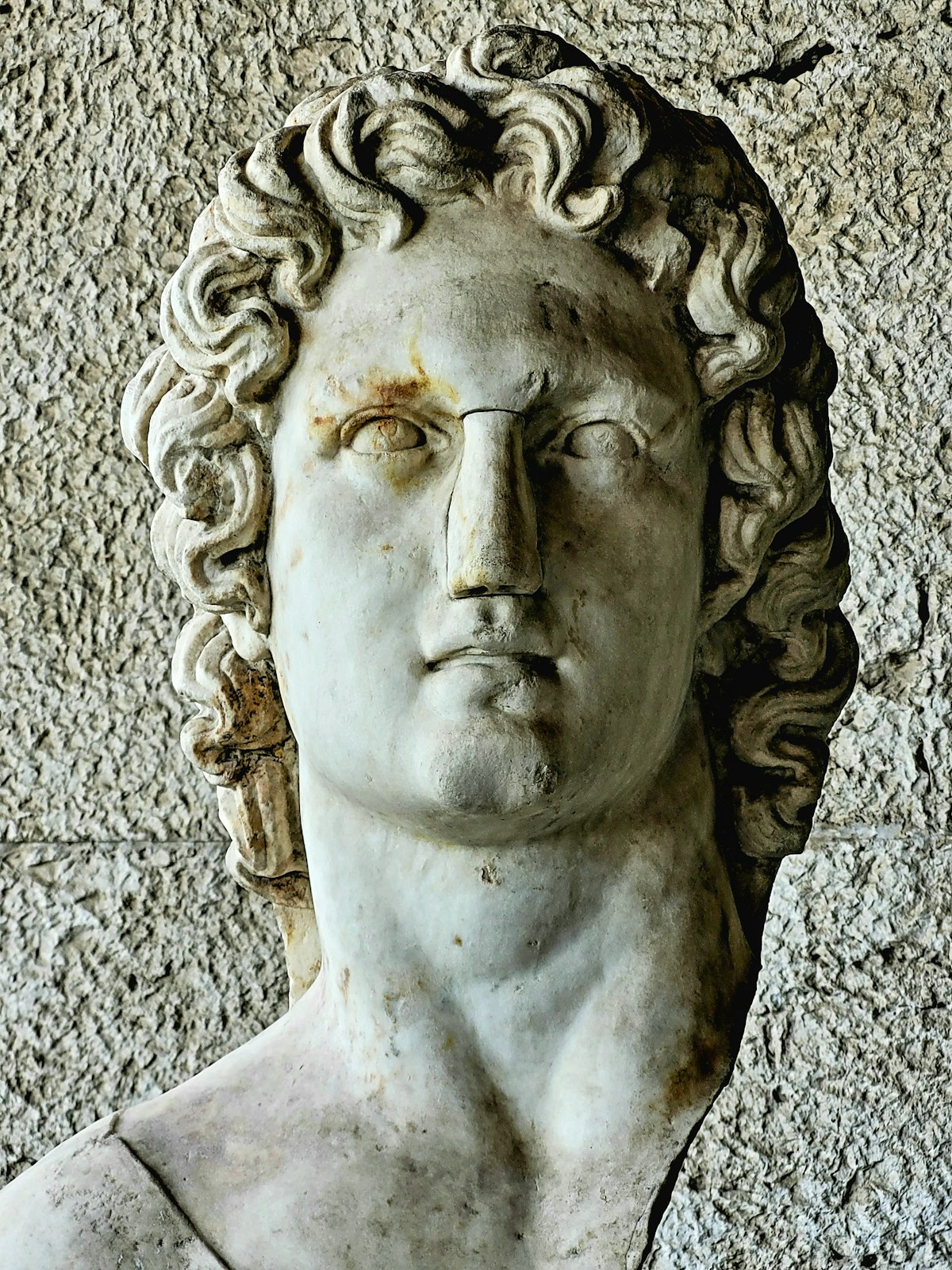
<p><img src="/assets/images/posts/what-is-truth/marble-bust.jpg" alt="A marble bust of a man with curly hair" />
<em>Photo by <a href="https://unsplash.com/@felipeperezlamana">Felipe Pérez Lamana</a> on <a href="https://unsplash.com/photos/GlkROV0KsmE">Unsplash</a></em></p>

<p>If truth were easy, I think the greatest minds in history would have answered this question and case closed. But instead, we are left with a trail of brilliant, incomplete answers, where each one illuminates a different face of the problem while leaving others in shadow. Let’s check four of them.</p>

<h3 id="plato-truth-as-perfect-form">Plato: Truth as Perfect Form</h3>

<p>Plato believed that truth exists independently of us. It is perfect, unchanging, and eternal. In <a href="https://kirkcenter.org/essays/human-nature-allegory-and-truth-in-plato-republic/"><em>The Republic</em> (Book VII)</a>, he described our everyday experience as shadows flickering on a cave wall (The Allegory of the Cave). The real objects casting those shadows, what he called the “Forms”, exist in a higher realm that most people never access. A chair you sit in, for example, is just a rough copy of the perfect Form of “chair.” Justice as we practice it in a courtroom is a pale imitation of the Form of Justice itself. Truth, for Plato, is not something we construct. It is something that we <em>discover</em>, if we are disciplined enough to turn away from the shadows and look toward the light.</p>

<p>This is a breathtaking vision. We commonly say, <em>not knowing the truth is being kept the dark</em>, but here is the problem. If truth lives in a realm only the enlightened few can reach, then who decides who qualifies as enlightened? In practice, this becomes a power game. The philosopher-king who claims to see the Forms gets to dictate reality to everyone else. Plato’s truth is <strong>absolute</strong>, but access to it is suspiciously exclusive.</p>

<h3 id="descartes-truth-through-radical-doubt">Descartes: Truth Through Radical Doubt</h3>

<p>René Descartes took a totally different path. In his <a href="https://en.wikipedia.org/wiki/Meditations_on_First_Philosophy"><em>Meditations on First Philosophy</em></a> (1641), he came in hot and decided to doubt everything. Totally everything! His senses, the external world, even mathematics, just to see if anything survived. After doubting it all, he was left with the act of doubting itself. If he was doubting, that means he was thinking. And if he was thinking, then he existed. <em>Cogito, ergo sum</em> (“I think, therefore I am.”) I imagine the <em>Ah Ah</em> moment he must have had. From that single robust point, he decided to rebuild all of human knowledge on a foundation of certainty.</p>

<p>This method is very very powerful, I have to acknowledge. But, as robust as doubt is, exiting doubt is not an easy task. From “I exist”, to prove the “external world”, Descartes had to make a belief-based argument on the existence of God, which his entire reconstruction was based on. In a nutshell, he started by trying to move beyond faith and assumption and ended up just doing that.</p>

<h3 id="nietzsche-truth-as-a-human-invention">Nietzsche: Truth as a Human Invention</h3>

<p>Friedrich Nietzsche turned the table over entirely. In <a href="https://en.wikipedia.org/wiki/On_Truth_and_Lies_in_a_Nonmoral_Sense"><em>On Truth and Lies in a Nonmoral Sense</em></a> (1873) and <a href="https://www.gutenberg.org/files/4363/4363-h/4363-h.htm"><em>Beyond Good and Evil</em></a> (1886), he argued that truth is not discovered or deduced; it is <em>invented</em>. He said, “There are no facts, only interpretations,”. According to Nietzsche, What we call truth are just metaphors that have been used so long we have forgotten they are metaphors. In his view, truth is shaped by power, perspective, and the will of whoever gets to define the terms.</p>

<p>Although I do think his position is thrilling, I also find it deeply unsettling. Hear me out! If nothing is objectively true, then what he claimed is not objectively true either. His relativism, just contradicts itself, but it is very obvious when we look around us that truth is wielded as a tool of power, and very often, dominant narratives crush inconvenient facts. There is probably an overstatement in what Nietzsche said, but it cannot be dismissed as it is a hard warning.</p>

<h3 id="william-james-truth-as-what-works">William James: Truth as What Works</h3>

<p>William James, approached the impasse with a practical move. In <a href="https://www.gutenberg.org/files/5116/5116-h/5116-h.htm#link2H_4_0003"><em>Pragmatism</em></a> (1907), he proposed that truth is not about matching some hidden reality or surviving philosophical doubt, it is about <em>results</em>. Simply put, an idea is true if it works. If it helps you navigate the world, if it produces useful and reliable outcomes. Truth is not a static property; it is something that <em>happens</em> to an idea when that idea proves its worth in practice.</p>

<p>That would make sense, right? let me ask this. Works for who? and under what conditions? A lie can be very useful. (Lies got me out of few situations myself 😄). On a serious note, propaganda <em>works</em>, at least for a while, at least for the people that create it. If truth is whatever produces results, then we have no principled way to distinguish what is genuinely true from a very convenient fiction. We could say, James gives us a working definition, but it is dangerously flexible.</p>

<hr />

<p>Here we are with four thinkers, four frameworks, and none of them holds up without a crack running through it.</p>

<ul>
  <li>Plato’s truth is inaccessible.</li>
  <li>Descartes’ truth rests on faith.</li>
  <li>Nietzsche’s truth undermines itself.</li>
  <li>James’s truth can justify almost anything.</li>
</ul>

<p>Each one of them gives us something valuable, just like a piece of the puzzle, but none of them gives us a solid ground to stand on.</p>

<p>The question remains, what is the ground beneath our feet? what is truth? What defines the truth?</p>

<h2 id="what-im-left-with">What I’m left with</h2>

<p><img src="/assets/images/posts/what-is-truth/contemplation.jpg" alt="Silhouette of a person looking out through a window at the sea" />
<em>Photo by <a href="https://unsplash.com/@noahsilliman">Noah Silliman</a> on <a href="https://unsplash.com/photos/gzhyKEo_cbU">Unsplash</a></em></p>

<p>So here I am, back from this little philosophical deep dive, and let’s be honnest: I do not have an answer 😅. For the least, I looked.</p>

<p>I am still in quest of how to assess and discern what is true from what is not. Plato was right that some truths feel bigger than our individual perspectives. Descartes was right that rigorously doubting is one of the sharpest tools we have. Nietzsche was right that power shapes what gets to be called truth. James was right that ideas earn their value in practice. But there is not a unified framework I could use in the morning to sort the news headlines cleanly into true and false.</p>

<p>The wars are still going. The contradictory coverage is still flowing. If anything, the philosophy made it worse, because now I cannot even pretend there is a simple standard I am failing to apply. The standard itself is the problem.</p>

<p>I do think that sitting with a discomfort of not knowning the truth might be the most honest thing I can do. Not picking a team. Not adopting one philosopher’s lens and pretending it covers everything. The discomfort of not having a clean answer is not a failure of thinking. It might be what real thinking actually feels like.</p>

<p>What I keep coming back to is the act of questioning itself, not as a performance, but as a discipline. The refusal to accept any single source, any single framework, any single voice as the final word. That refusal does not give me certainty. It does not make me right. But it keeps me from being easy to fool, including by myself.</p>

<p>In a world saturated with confident claims and algorithmically curated realities, that might be the closest thing to intellectual honesty I can manage.</p>

<p>I did not mean for this to be this long. It’s the longest I have written, but to conclude, I am not done with this question. Not even close. But I wanted to start here, with the admission that I do not know, and that I am choosing to keep looking anyway.</p>

<h2 id="what-comes-next">What Comes Next</h2>

<p><img src="/assets/images/posts/what-is-truth/fork-in-road.jpg" alt="Two dirt paths diverging in a green forest" />
<em>Photo by <a href="https://unsplash.com/@leliejens">Jens Lelie</a> on <a href="https://unsplash.com/photos/u0vgcIOQG08">Unsplash</a></em></p>

<p>You know what? Maybe the scope was too broad to have an answer to that question. In some future posts, probably; God willing; I want to explore some questions from different angles. Angles where truth gets made, broken, and fought over every day:</p>

<ul>
  <li><strong>Religion</strong> – billions of people live by truths accepted on faith, not evidence (The belief system). What makes a belief true to the believer, and does it matter whether anyone else agrees?</li>
  <li><strong>Science</strong> – physics, mathematics, and the hard sciences give us truths that are supposedly provable. But are they absolute, or just the best answers we have until better ones arrive?</li>
  <li><strong>AI &amp; Technology</strong> – Now we have systems that generate “truth” without understanding a word of it. What happens when the source of information has no concept of honesty? (👀 AI, I see you!)</li>
  <li><strong>Media</strong> – This is an entire industry built on deciding what is true on our behalf, and packaging it for us to consume before we can even if possible examine it ourselves.</li>
  <li><strong>Politics</strong> – Hmmmm. Here, truth stops being a question and becomes a tool of power, bent and sharpened to serve whoever holds it.</li>
</ul>

<p>These are angles that we could explore in other articles. Before I leave, let me leave you with this. I promise, it is not a clifhanger.</p>

<p>If you cannot fully trust the philosophers, the institutions, the algorithms, or even your own experience to deliver the truth reliably, how do you do it? How do you find the truth? What is true?</p>

<p>Till the next one, Stay safe and stay blessed!</p>

<hr />

<h2 id="references">References</h2>

<ul>
  <li>Plato, <a href="https://kirkcenter.org/essays/human-nature-allegory-and-truth-in-plato-republic/"><em>The Republic</em>, Book VII (Allegory of the Cave)</a></li>
  <li>Descartes, R. (1641). <a href="https://en.wikipedia.org/wiki/Meditations_on_First_Philosophy"><em>Meditations on First Philosophy</em></a></li>
  <li>Nietzsche, F. (1873). <a href="https://en.wikipedia.org/wiki/On_Truth_and_Lies_in_a_Nonmoral_Sense"><em>On Truth and Lies in a Nonmoral Sense</em></a></li>
  <li>Nietzsche, F. (1886). <a href="https://www.gutenberg.org/files/4363/4363-h/4363-h.htm"><em>Beyond Good and Evil</em></a></li>
  <li>James, W. (1907). <a href="https://www.gutenberg.org/files/5116/5116-h/5116-h.htm#link2H_4_0003"><em>Pragmatism: A New Name for Some Old Ways of Thinking</em></a></li>
  <li>Copernicus, N. (1543). <a href="https://en.wikipedia.org/wiki/De_revolutionibus_orbium_coelestium"><em>De revolutionibus orbium coelestium</em></a></li>
  <li>Galilei, G. (1610). <a href="https://en.wikipedia.org/wiki/Sidereus_Nuncius"><em>Sidereus Nuncius</em></a></li>
  <li>Kepler, J. (1609). <a href="https://en.wikipedia.org/wiki/Astronomia_nova"><em>Astronomia Nova</em></a></li>
  <li><a href="https://www.merriam-webster.com/dictionary/truth">Merriam-Webster Dictionary: Truth</a></li>
</ul>]]></content><author><name>Samuel Klutse</name><email>klutse.samuel@gmail.com</email></author><category term="thoughts" /><category term="truth" /><category term="philosophy" /><category term="series" /><summary type="html"><![CDATA[Multiple wars, multiple headlines, multiple truths. What is the truth — and how can we know?]]></summary><media:thumbnail xmlns:media="http://search.yahoo.com/mrss/" url="https://samuelklutse.com/assets/images/posts/what-is-truth/newspapers.jpg" /><media:content medium="image" url="https://samuelklutse.com/assets/images/posts/what-is-truth/newspapers.jpg" xmlns:media="http://search.yahoo.com/mrss/" /></entry><entry><title type="html">Welcome to My Blog</title><link href="https://samuelklutse.com/welcome/" rel="alternate" type="text/html" title="Welcome to My Blog" /><published>2026-03-15T00:00:00+00:00</published><updated>2026-04-03T00:00:00+00:00</updated><id>https://samuelklutse.com/welcome</id><content type="html" xml:base="https://samuelklutse.com/welcome/"><![CDATA[<p><img src="/assets/images/posts/welcome/coffee-laptop.jpg" alt="Coffee and laptop on a desk" />
<em>Photo by <a href="https://unsplash.com/@helloaesthe">hello aesthe</a> on <a href="https://unsplash.com/photos/jrN8iwjsUw4">Unsplash</a></em></p>

<p>Thank you for stopping by for a second. This is my first post on this new blog. A little sneak peek about me, can be found <a href="/about/">here</a>.</p>

<h2 id="purpose-of-this-blog">Purpose of This Blog</h2>

<p>On this blog I will be sharing about technology, programming, and cyber security, because that’s what I do most of my days. I will also talk about photography and what I learned along the journey. There will also be talks about general ideas, concepts, and thoughts, so we can have some discussions or brainstorm in the comment section.</p>

<p>Stay tuned and till the next one, be safe and be blessed!</p>]]></content><author><name>Samuel Klutse</name><email>klutse.samuel@gmail.com</email></author><summary type="html"><![CDATA[Not my first post but my first post here!]]></summary><media:thumbnail xmlns:media="http://search.yahoo.com/mrss/" url="https://samuelklutse.com/assets/images/posts/welcome/coffee-laptop.jpg" /><media:content medium="image" url="https://samuelklutse.com/assets/images/posts/welcome/coffee-laptop.jpg" xmlns:media="http://search.yahoo.com/mrss/" /></entry><entry><title type="html">My 2024 Wrapped - LinkedIn Edition</title><link href="https://samuelklutse.com/personal/my-2024-wrapped/" rel="alternate" type="text/html" title="My 2024 Wrapped - LinkedIn Edition" /><published>2024-12-31T00:00:00+00:00</published><updated>2026-04-03T00:00:00+00:00</updated><id>https://samuelklutse.com/personal/my-2024-wrapped</id><content type="html" xml:base="https://samuelklutse.com/personal/my-2024-wrapped/"><![CDATA[<p><img src="/assets/images/posts/2024-wrapped/fireworks.jpg" alt="Fireworks in the night sky" />
<em>Photo by <a href="https://unsplash.com/@rayhennessy">Ray Hennessy</a> on <a href="https://unsplash.com/photos/5UbklC1D0zA">Unsplash</a></em></p>

<p>This year was quite a very interesting one. I learned a lot, did somewhat a bunch not only in Software Development, but also Cyber Engineering, Networking and System Administration.</p>

<p>Although, a lot of the work was for fun and not in a corporate environment, for me, it was still an amazing year to have all this experience acquired in a unique and fun way (late nights debugging because I could not understand why a helm chart does not deploy, and would think about it in my sleep till I get it to work).</p>

<p>Without further ado, here are a list of things I dabbled from this year:</p>

<h2 id="software-development--devops--gitops">Software Development / DevOps / GitOps</h2>

<ul>
  <li>Developed a VS Code extension in Typescript that creates/edits H5P files that can be used for interactive assessments for students.</li>
  <li>Developed a Python application that indexes my Obsidian notes to a Vector database.</li>
  <li>Migrated away from Docker and Docker-compose and moved to Kubernetes for container orchestration and management.</li>
  <li>Developed a CI/CD pipeline using GitHub Actions to automate the deployment of Ansible playbooks.</li>
  <li>Configured an 8-node Kubernetes cluster with 3 masters and 5 workers running rke2 for the homelab.</li>
  <li>Automated the creation of VMs on Proxmox VE with Terraform and Ansible.</li>
  <li>Developed an easy and seamless upgrade/update management of the Kubernetes cluster using Ansible and GitHub Actions.</li>
  <li>Deployed CloudFormation stacks (ECS Fargate Services, VPC, RDS, network configuration and policies) on AWS using the CDK in Typescript.</li>
  <li>Worked on a Relativity integration for ArkCase FOIA using Java.</li>
  <li>Learned and did some projects with NextJS.</li>
</ul>

<h2 id="ai">AI</h2>

<ul>
  <li>Developed an AI Agent that uses the Vector database for Retrieval Augmented Generation (RAG) using Python.</li>
  <li>Developed an AI agent that listens to audio, transcribes and replies by text or audio using LLMs (TTS, STT and STS).</li>
  <li>Developed an AI agent that on request, takes pictures and describes them in detail using LLMs using Python.</li>
  <li>Developed an AI agent that can generate images using LLMs using Python.</li>
</ul>

<h2 id="networking--system-administration--cyber-engineering">Networking / System Administration / Cyber Engineering</h2>

<ul>
  <li>This year I have been very proficient in configuring my own OPNSense/PFSense routers, custom DNS providers and ad blockers (AdGuard and Pi-Hole).</li>
  <li>Configured a home network of 4 segmented networks with one for work, one for the DMZ where I play games to avoid lags, and one for my homelab cluster.</li>
  <li>Configured firewall rules to restrict access and route traffic between networks.</li>
  <li>Deployed and configured Identity Providers (IDP) such as Keycloak, Authelia and Authentik.</li>
  <li>Configured VPNs to connect remotely to my network using Wireguard and Tailscale.</li>
  <li>Built a computer with 128 GB RAM, 32 cores CPU, 48 GB VRAM (2x24 GB NVIDIA GeForce RTX 4090) that I use to host locally my LLMs.</li>
  <li>Monitored the performance of my stack with Uptime-Kuma and Grafana and developed dashboards in Grafana to monitor the network status and threats.</li>
  <li>Automated vulnerability scans and security testing of the homelab stack.</li>
</ul>

<p>I still have a lot more to talk about on 2024, but I think this will do it as those are on a high level what I could remember.</p>

<h2 id="whats-next-looking-forward-to-2025">What’s Next: Looking Forward to 2025</h2>

<p>Here are a few things I have pending and that need to be improved in 2025:</p>

<ul>
  <li>A fully fledged automated backup system of storage, VMs, databases, etc.</li>
  <li>Security is an ongoing process, so improve as much as I can in that regard because in 2024, I filtered a lot of what goes out to the internet, my IPS and services providers that use my data. I need to improve that.</li>
  <li>Write articles about the cool things I work on, as I did not write any in 2024. I need to make time for those.</li>
  <li>Finish or even get close to a state of which I’m happy with Jeff… (You wonder who Jeff is, huh?). Simply put, he’s an AI assistant that will be an extension of me and help improve my productivity and QOL in many ways. It already encompasses some of the AI work I described earlier.</li>
  <li>I am excited by the state of AI and open LLMs like Llama 3, Deepseek v3, which I use daily. So I want to explore more on that front as well.</li>
  <li>Lastly, I need to improve my physical health, which is not bad but could be better.</li>
</ul>

<hr />

<p>On this I would say, thank you guys for reading my Ted Talk… oops, I meant LinkedIn Wrap, and I wish you all the best for 2025, and I’m excited about the amazing things you will accomplish as well.</p>]]></content><author><name>Samuel Klutse</name><email>klutse.samuel@gmail.com</email></author><category term="personal" /><category term="year-in-review" /><category term="homelab" /><category term="devops" /><category term="AI" /><summary type="html"><![CDATA[A look back at everything I dabbled in during 2024 — from Kubernetes clusters to AI agents to building a 128 GB RAM machine with dual 4090s.]]></summary><media:thumbnail xmlns:media="http://search.yahoo.com/mrss/" url="https://samuelklutse.com/assets/images/posts/2024-wrapped/fireworks.jpg" /><media:content medium="image" url="https://samuelklutse.com/assets/images/posts/2024-wrapped/fireworks.jpg" xmlns:media="http://search.yahoo.com/mrss/" /></entry><entry><title type="html">AI-Powered MCPs</title><link href="https://samuelklutse.com/tech/ai-powered-mcps/" rel="alternate" type="text/html" title="AI-Powered MCPs" /><published>2022-10-11T00:00:00+00:00</published><updated>2026-04-03T00:00:00+00:00</updated><id>https://samuelklutse.com/tech/ai-powered-mcps</id><content type="html" xml:base="https://samuelklutse.com/tech/ai-powered-mcps/"><![CDATA[<p>MCPS? AI? Let’s quickly define a few terms before you skip this article for the next one. An MCPS simply means Medical Cyber-Physical System and Internet of Things (IoT) devices such as Pacemakers, and Generic Patient Controlled Analgesia (GPCA) fall under that category. AI stands for Artificial Intelligence and I bet this one you knew it. AI has a diverse domain of applications and touches every sector of business such as transport, healthcare, banking, retail, entertainment, and e-commerce to only name a few.</p>

<p>A recent project I worked on for one of my classes consisted of engineering a MCPS constituted of a physical device with sensors with processing ability, mobile software, and a cloud platform that will store and analyze the aggregated from different sources. The focus however for that project was on the security aspect, the different Trusted Platform Modules (TPM), the protocols for encrypting the data while it is transferred from one device to another, and also the pros and cons of using a certain technology instead of another one (Bluetooth or Wifi for example). I will give a more detailed article about the Heart Rate Monitoring System that I engineered in a later article.</p>

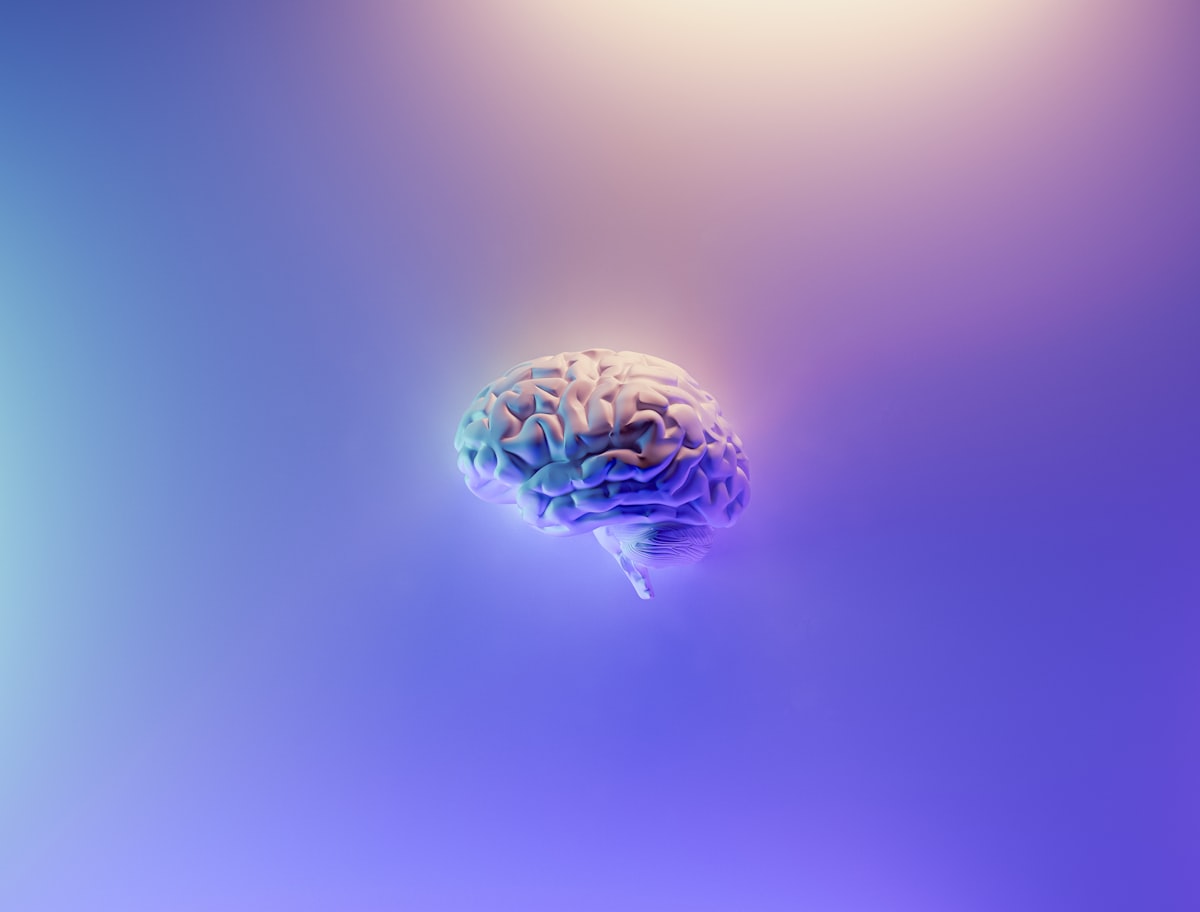
<p><img src="/assets/images/posts/ai-powered-mcps/digital-thinking.jpg" alt="Digital thinking — a 3D rendered brain on a gradient background" />
<em>Photo by <a href="https://unsplash.com/@fakurian">Milad Fakurian</a> on <a href="https://unsplash.com/photos/58Z17lnVS4U">Unsplash</a></em></p>

<h2 id="where-is-all-this-talk-leading-us">Where Is All This Talk Leading Us?</h2>

<p>Well, an idea struck me while working on that project.</p>

<p>Let’s dream a little bit.</p>

<p>Imagine a world where we can read dreams.</p>

<p>At least, record them. (Yes, I know recording nightmares too but let’s just focus on the dreams).</p>

<p>Let me explain…</p>

<p>According to Blocka, K. (2018), an EEG or Electroencephalogram is a test used to evaluate the electrical activity in the brain. Brain cells communicate with each other through electrical impulses. An EEG can be used to detect problems associated with this activity. In healthcare, EEG tests have been used to confirm or rule out various conditions such as seizure disorders, head injuries, encephalitis, brain tumor, sleep disorders, encephalopathy, stroke, and dementia. They are usually painless and very safe for patients. One of the cons is that several types of movements such as pulse and heartbeats, and breathing can cause EEG recordings that mimic brain waves and it’s up to the EEG interpreter to take those into account.</p>

<p>Many EEG headsets made their way onto the market recently and are available for the general public. According to Farnsworth, B. (2019), many EEG headsets can range from $99 to $1000.</p>

<p>I believe the market availability and the low price of these devices create a new set of opportunities. An MCPS can be built so that the brain waves recorded from these headsets (during sleep probably) can be sent to a mobile application that will then sync in real-time to a cloud platform. The aggregated data can then be analyzed using AI, to either find patterns or predict some abnormalities for some patients.</p>

<h2 id="a-few-use-cases">A Few Use Cases</h2>

<p>A pattern can be found in a certain user’s data showing a rise in brain activities during his sleep around a certain time of the month or the year, which means the user during that time is stressed for example.</p>

<p>Another use case can be a certain patient presenting a brain wave signature recorded from people with brain tumors, thus implying the user should get checked for tumors and early detection can mean saving a life.</p>

<p>The idea behind this MCPS is not new and is already being used by our Apple watches which record how well we slept or take our pulses to let us know whether we are stressed or not.</p>

<p>Yes, the MCPS I described in this article does not cover the dream translation part but in a near future, a technology to translate the brain waves will see light and therefore shed some light on our dreams and nightmares.</p>

<hr />

<h2 id="references">References</h2>

<ul>
  <li>Blocka, K. (2018, September 29). <em>EEG (Electroencephalogram) Overview</em>. Healthline. <a href="https://www.healthline.com/health/eeg">https://www.healthline.com/health/eeg</a></li>
  <li>Farnsworth, B. (2019, July 17). <em>EEG Headset Prices - An Overview of 15+ EEG Devices</em>. iMotions. <a href="https://imotions.com/blog/eeg-headset-prices/">https://imotions.com/blog/eeg-headset-prices/</a></li>
</ul>]]></content><author><name>Samuel Klutse</name><email>klutse.samuel@gmail.com</email></author><category term="tech" /><category term="AI" /><category term="cybersecurity" /><category term="science" /><summary type="html"><![CDATA[What happens when you combine Medical Cyber-Physical Systems, consumer EEG headsets, and AI? Maybe one day we'll find out what our dreams are really about.]]></summary><media:thumbnail xmlns:media="http://search.yahoo.com/mrss/" url="https://samuelklutse.com/assets/images/posts/ai-powered-mcps/digital-thinking.jpg" /><media:content medium="image" url="https://samuelklutse.com/assets/images/posts/ai-powered-mcps/digital-thinking.jpg" xmlns:media="http://search.yahoo.com/mrss/" /></entry></feed>